


Medically Reviewed By
Dr. Neeraj Kumar
MD, DCH
Table of Contents:
Video: Can We Use Baby Walker or Not?
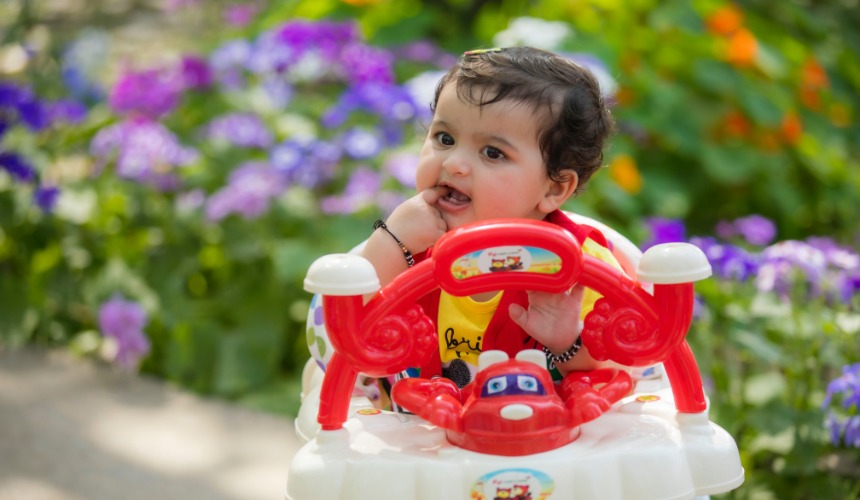
Although a baby walker seems like an amazing device to let your baby learn walking, there is an appropriate age when they should be allowed to ride the walker.
The right age for baby walker depends on the individual child’s development. Typically, babies can start using a walker around the age of 6 months, when they are able to sit up on their own and hold their head up.
However, it is important to note that every baby develops at their own pace, and some may not be ready for a walker until they are closer to 8 or 9 months old.

How long should a baby be in a walker?
Parenting Tip:
Seek help when needed: Don’t hesitate to ask family, friends, or professionals for help when you need it
Advantages of Baby Walkers:
A few advantages of using a baby walkers are as follows:
- Sense of freedom for the baby: One of the main advantages of using a baby walker is that it allows babies to have a sense of independence and freedom as they are able to move around and explore their environment. This can be particularly beneficial for babies who are curious and eager to learn about the world around them.
- Development of motor skills: Baby walkers can also help with the development of motor skills such as balance and coordination. By being in a walker, babies can learn how to move their legs and feet to propel themselves forward and how to use their arms to steer and control their direction of movement. This can help to prepare them for the eventual transition to walking on their own. Hence, the age babies use a walker is ideally 6 months to aid development of these skills.
- Safe monitoring of the baby: Another advantage of baby walkers is that they can be a helpful tool for parents. They provide a safe and secure way to keep an eye on their baby while they are busy with other tasks. This can be particularly useful for parents who have multiple children or who are trying to balance multiple responsibilities at once.
- Sensory stimulation for the baby: In addition, a baby walker can be a great way for the baby to interact with their surroundings, walkers usually come with different toys, attached to the front of the walker, which can stimulate their senses and help to develop their cognitive skills.

Parenting Tip:
Bond with your baby: Spending quality time with your baby will strengthen your relationship and build trust.
Disadvantages of Baby Walkers:
Depending on when and how they are used, baby walkers have some disadvantages too.
- Delayed Walking & Crawling: One of the main disadvantages of using a baby walker is that prolonged use can delay the development of important motor skills, such as crawling and walking. This is because babies who spend a lot of time in walkers may not have the opportunity to develop the strength and coordination they need to crawl and walk on their own.
- Risk Of Falls And Injuries: Another disadvantage is that being in a walker for too long can put a baby at risk for falls and other injuries. Walkers are not always stable and babies can tip over or fall out of them if they are not properly supervised. Additionally, walkers can be dangerous if used on uneven surfaces or near stairs as babies can easily fall and get injured.
- Limited Exploration For The Baby: Another disadvantage of walkers is that they can limit the baby’s exploration and interaction with their surroundings. As babies are confined to the walker, they may not have the opportunity to reach, grab and explore objects in their environment as they would have if they were crawling or walking on their own.
- Discouraging Crawling: Furthermore, walkers can discourage the baby from crawling, which is an important developmental milestone, as babies learn to use their arms and legs to propel themselves forward and to develop their coordination. While the right age for a baby walker is 6 months, it is important to ensure that the baby isn’t left in the walker for too long.
- Impractical Investment: Lastly, walkers can be expensive and may not be practical for all families, especially for those with limited space or budget.

Things To Keep In Mind While Buying A Baby Walker:
When buying a baby walker, there are a few things to keep in mind to ensure the safety and comfort of your
- Child: Safety features: Look for walkers that have a wide base, anti-tip design and a brake system to prevent the walker from rolling away.
- Adjustability: Look for a walker that can be adjusted to different heights as your baby grows.
- Seat: The seat should be comfortable, padded and machine washable to keep it clean.
- Durability: Look for a walker that is made of durable materials that can withstand the wear and tear of regular use.
- Activity centers: Some walkers come with activity centers that can provide entertainment and stimulation for your baby.
- Portability: If you plan to travel with the walker, consider a lightweight and foldable option.
- Weight limit: Check the weight limit of the walker and make sure it can accommodate your baby’s weight.
- Brand reputation: Consider buying from a reputable brand to ensure quality and safety.
- Price: Compare prices and features of different baby walkers to find the best value for your money.
- Reviews: Read customer reviews to get an idea of other parents’ experience with the walker.
Parenting Tip:
Get organized: Having a routine and a well-organized household can help ease the stress of parenting.

How To Use Baby Walkers?
Parenting Tip:
Establish a sleep routine: Establishing a sleep routine can help both you and your baby get the rest you need.
When introducing a walker to baby, it is important to take certain precautions to ensure the safety of your child. The following are some key precautions to take when introducing baby to a walker:
- Always supervise your child: Never leave your baby alone in a walker, as they can easily tip over or fall out of the walker if they are not properly supervised.
- Use the walker on a flat, even surface: Avoid using the walker on uneven surfaces or near stairs, as babies can easily fall and get injured.
- Make sure the walker is properly assembled and in good condition: Before each use, check that the walker is properly assembled and in good condition. Look for any loose parts, missing screws, or other damage that could make the walker unstable or dangerous.
- Use the walker in moderation: It is generally recommended that babies should not spend more than 20 minutes at a time in a walker. Prolonged use can delay the development of important motor skills and put the baby at risk for falls and other injuries.
- Avoid using walkers near hazardous areas: Keep the walker away from the kitchen or other hazardous areas, such as the bathroom or laundry room, where there may be hot surfaces or cleaning chemicals.
- Keep the baby’s hands and feet inside the walker: Make sure your baby’s hands and feet are inside the walker at all times to prevent them from getting pinched or caught in the mechanism.
- Do not use walkers as a substitute for other types of play: Walkers should not be used as a substitute for other types of play, such as tummy time, crawling, and walking. These activities are important for the baby’s overall development.
Parenting Tip:
Trust your instincts: You know your baby better than anyone else, so trust your instincts and do what feels right.
- Place the walker on a flat and even surface, and make sure the walker is properly assembled and in good condition.
- Place the baby in the walker and make sure they are sitting comfortably and securely.
- Keep the walker away from stairs, and any other areas where the baby may fall or get injured.
- Always supervise the baby while they are in the walker, and never leave them alone.
- Limit the time the baby spends in the walker, it should not be more than 20 minutes a time.
Some Safe Alternatives To Baby Walkers, According to Doctors
- Exersaucers: These are stationary activity centers that provide a safe and secure environment for your baby to play and explore.
- Jumpers: Jumpers are similar to exersaucers, but they allow your baby to jump and bounce in a safe and secure environment.
- Play yards: These provide a large and safe space for your baby to play and explore. Some play yards also come with built-in activity centers and toys.
- Walk-behind toys: These are toys that your baby can push or pull while learning to walk.
- Push walkers: These are similar to walkers but instead of wheels, they have a handle for your baby to push and pull to practice walking.
- Baby carriers: Carriers allow your baby to be close to you and move with you, giving them the sense of security and stimulation they need.
- Bouncers: Bouncers are seats that gently bounce when your baby moves, providing them with entertainment and helping to develop their motor skills.
- Play mats: These provide a soft and safe place for your baby to play and explore. Many play mats come with built-in toys and activities.
Parenting Tip:
Be flexible: Be prepared to adjust your plans and routines as needed, as your baby grows and changes.
FAQs:
Wait until your baby can sit up on their own and hold their head steady, usually around 6 to 8 months. Every baby grows at their own pace, so check with your paediatrician before you start.
No. A walker does not make a baby walk earlier, and spending too long in one can actually delay crawling and walking. Babies learn to walk best through floor play, crawling and pulling themselves up.
Keep it short: no more than 15 to 20 minutes at a time. Your baby should spend most of their awake time on the floor, playing freely.
Walkers can lead to falls, tip-overs and injuries, especially near stairs or hot surfaces. Many child health experts advise avoiding wheeled walkers, so if you use one, stay close and watch your baby at all times.
There’s no strong proof that walkers cause bow legs, and mild bowing is normal in young babies. If your baby’s legs look very curved or the curve doesn’t improve with age, show them to a doctor.
Walkers can reduce crawling, delay walking, and raise the risk of falls and injuries. They also limit how much your baby reaches for, touches and explores things around them.
Choose one with a wide, stable base, brakes or anti-tip stoppers, an adjustable height and a soft, washable seat. Check the weight limit, and buy from a trusted brand that meets safety standards.
No, never leave your baby alone in a walker, even for a moment. Babies can move surprisingly fast and reach stairs, kitchen counters or hot water within seconds.
Try a play mat, a playpen, a stationary activity centre, or a push toy your baby walks behind while holding on. Daily tummy time and floor play also help build the strength needed for walking.
Most babies start walking between 9 and 18 months. If your baby isn’t walking by 18 months, or isn’t sitting, crawling or standing with support at the expected ages, talk to your paediatrician.