

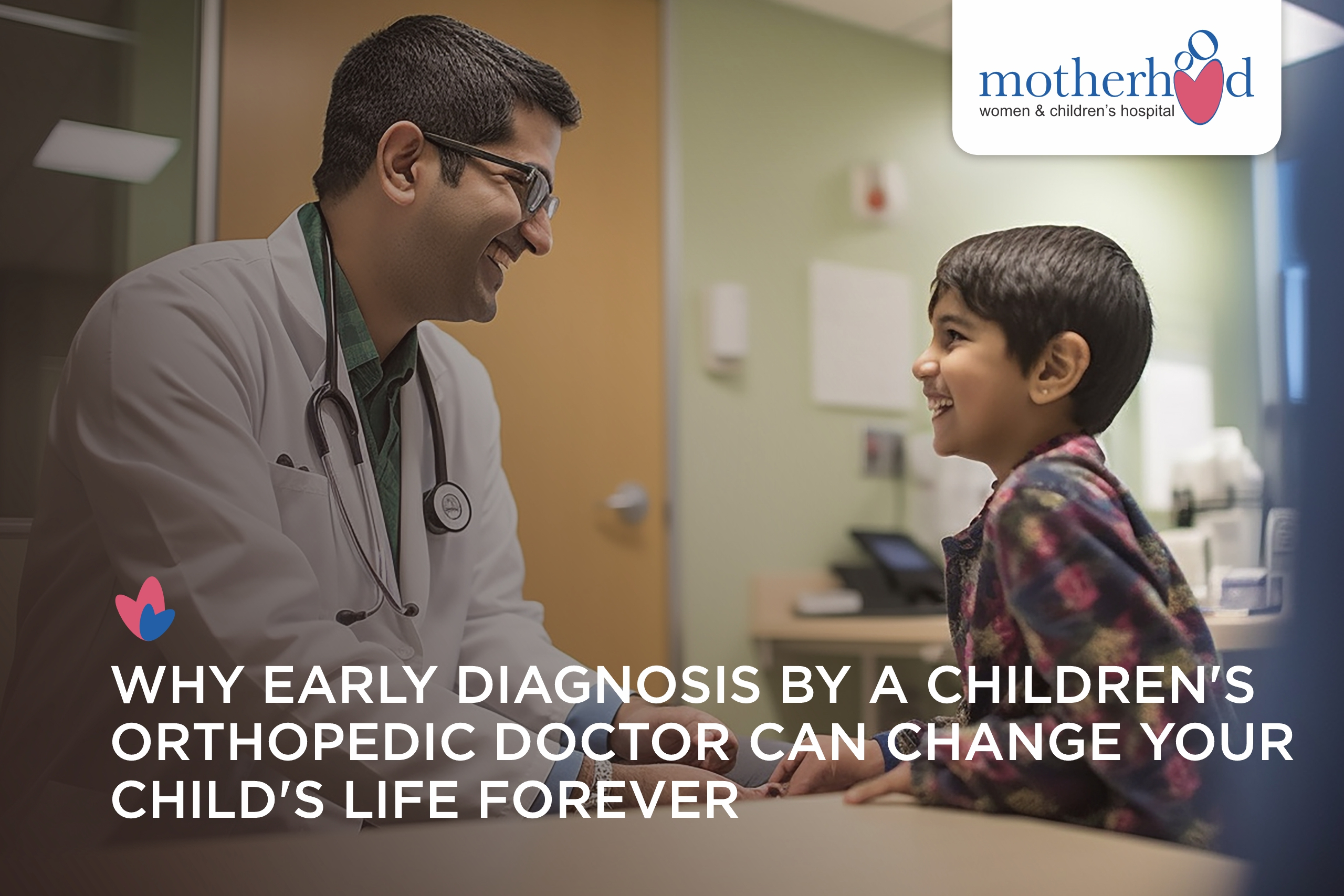

Medically Reviewed By
Dr. Nikhil Mehta
MS (Orthopaedics), Fellowship in Paediatric Orthopaedics (PGI)
Introduction:

Children grow fast. Their bones harden, their joints shift, and their posture takes shape in ways that are hard to see happening in real time. Because growth is so rapid, a problem that seems small today can quietly settle in and become something far harder to reverse a year or two down the line.
Most parents understandably wait to see if things improve on their own. Sometimes they do. But when a child keeps limping, complains about joint pain more than once, or falls behind on basic physical milestones, that is not something to let slide. Speaking with the best pediatric orthopedic surgeon hospital in Chandigarh at the right time can save a child from years of avoidable difficulty.
Why children's bones need specialist attention

An adult’s skeleton and a child’s skeleton are not the same thing. Childrens bones are softer, still growing, and are influenced by the growth plates at each end of the long bones. These plates are sensitive. An untreated injury or structural issue near a growth plate can redirect how that bone develops, leading to lasting problems in posture, alignment, or movement.
This is exactly why it matters to consult children orthopedic doctors in Chandigarh who are specifically trained for growing bodies, rather than assuming that general medical advice is sufficient. The approach to a ten-year-old’s knee pain is fundamentally different from the approach to the same complaint in a forty-year-old.
Common conditions parents should know about
Several orthopaedic conditions are particularly common in children, and many of them respond well when caught early:
- Bow legs or knock knees
- Flat feet that affect gait and cause fatigue
- Developmental dysplasia of the hip
- Stress fractures and sports-related injuries
- Scoliosis is an abnormal curve of the spine
A paediatric orthopaedic surgeon in Chandigarh can spot patterns in the way a child moves, stands, and bears weight that a parent or general doctor might easily miss. That clinical eye, combined with targeted imaging when needed, makes an enormous difference in how early a condition is identified.
Warning signs that deserve a professional opinion
Parents spend more time watching their children move than any doctor does, which puts them in a uniquely good position to notice when something feels off. The following precautions are must
- A limp that comes and goes, or one that has been present for more than a week
- One shoulder, hip, or knee sitting noticeably higher than the other
- Recurring pain in the legs, back, or joints, especially after activity
- A child who avoids running, jumping, or playing with other children
- Walking that started later than expected, or a toddler who keeps falling more than is typical
These do not always point to something serious, but a consultation removes the uncertainty. If a problem is present, finding it now gives the family options that may not exist later.
What a specialist evaluation involves
A first visit to a children’s orthopaedic specialist is usually straightforward. The doctor will observe how the child walks, check the range of motion in the relevant joints, and review any history of injury or past medical concerns. Depending on what the examination reveals, imaging such as an X-ray or ultrasound may be arranged.
Families seen at the best pediatric orthopedic surgeon hospital in Chandigarh can expect a clear explanation of what has been found and what the next step involves. In many cases, no intervention is needed right away. In others, the sooner treatment begins, the simpler it tends to be.
Treatment options and what to expect
When treatment is required, the first preference is almost always non-surgical. Physiotherapy to build strength and correct movement patterns, orthopaedic bracing to guide alignment, and scheduled follow-ups during growth spurts are all standard approaches. Surgical options are considered only when non-surgical care is genuinely insufficient, and even then, the goal is always the least disruptive path forward.
Working regularly with children orthopedic doctors in Chandigarh throughout the growth years means that changes in the child’s condition are caught early and managed proactively, rather than waiting until something becomes a real problem.
Conclusion
A child who can run, play, and move without pain has a very different experience of growing up than one who cannot. Orthopaedic problems that are addressed early often resolve more effectively and with minimal disruption to a child’s daily life.
If you have noticed anything unusual about your child’s movement, posture, or walking pattern, do not ignore those early signs. Consulting an experienced paediatric orthopaedic specialist can help identify the issue at the right time and ensure proper treatment.
For expert guidance and compassionate care, consult Dr. Nikhil Mehta at Motherhood Chaitanya Hospital. A timely evaluation can provide clarity, reassurance, and the right support your child needs to grow stronger, healthier, and more confident.
FAQs:
If your child has persistent joint pain, limping, poor posture, delayed walking, or difficulty running and playing, it is important to consult a specialist early
A pediatric orthopedic doctor treats bone, joint, muscle, spine, and growth-related conditions in children, including scoliosis, flat feet, fractures, and hip disorders.
Mild bow legs and knock knees can be normal during growth, but severe or persistent cases should be evaluated by a specialist like Dr. Nikhil Mehta.
Common signs include uneven shoulders, tilted hips, poor posture, or an abnormal curve in the spine.
Early diagnosis helps prevent long-term complications and allows simpler, more effective treatment during a child’s growing years.
Yes, flat feet can sometimes lead to pain, fatigue, difficulty walking, and posture-related issues if left untreated.
No, many conditions can be treated with physiotherapy, braces, exercises, and regular monitoring without surgery.
The doctor checks your child’s posture, walking pattern, joint movement, and medical history. Imaging tests like X-rays may also be recommended if needed.
Treatment depends on the severity of the injury and may include rest, physiotherapy, bracing, or in some cases, surgery.
You can consult Dr. Nikhil Mehta at Motherhood Chaitanya Hospital for expert pediatric orthopedic care and treatment.